The Science Behind ACPI™
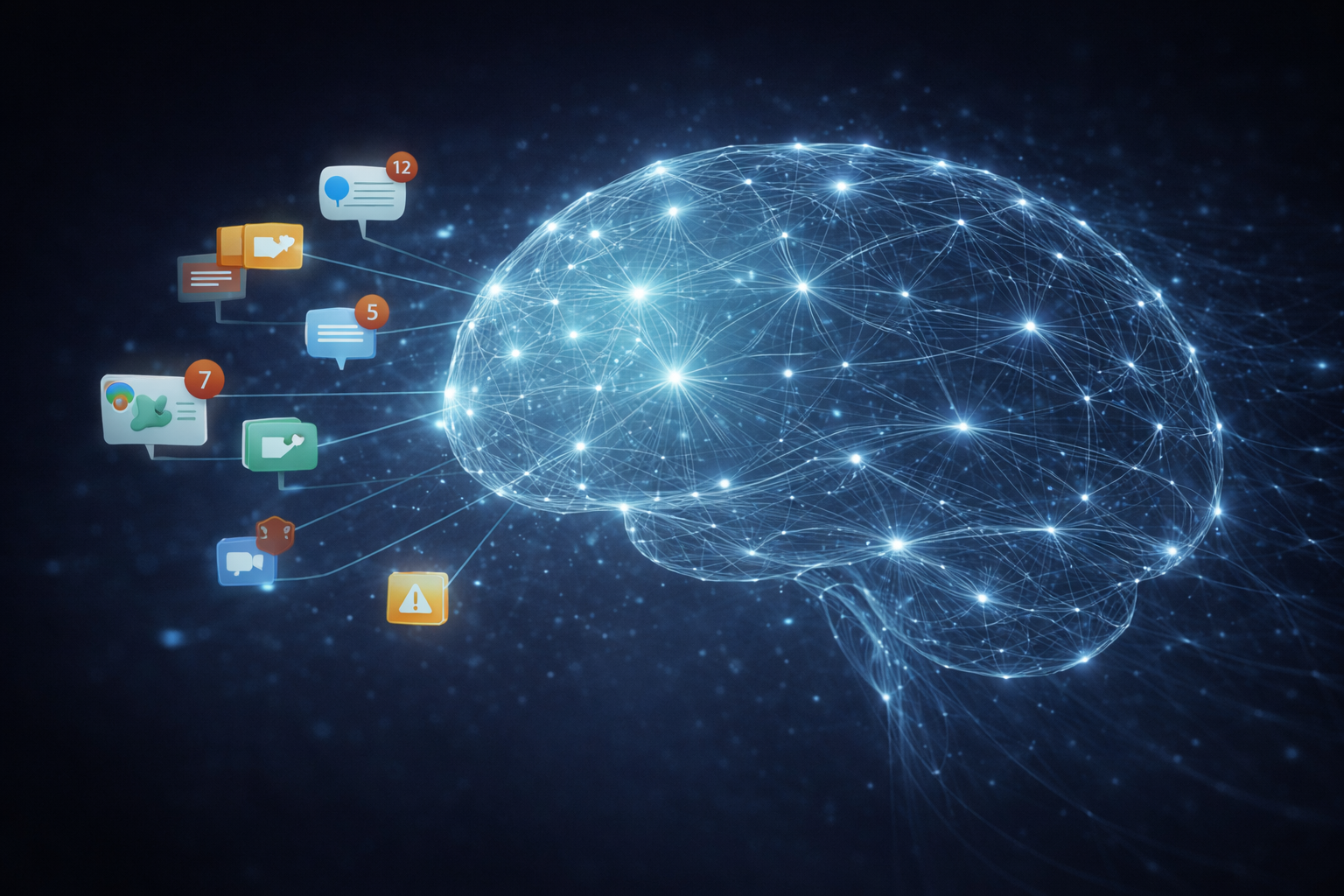
The AI Cognitive Performance Index™ is informed by research in cognitive psychology, behavioral science, and human–computer interaction.
These research domains examine how modern digital environments influence attention, decision-making, and mental workload.
The Science Behind ACPI™
-
Research Overview
The AI Cognitive Performance Index™ (ACPI™) was developed to explore how modern digital environments affect human cognitive performance.
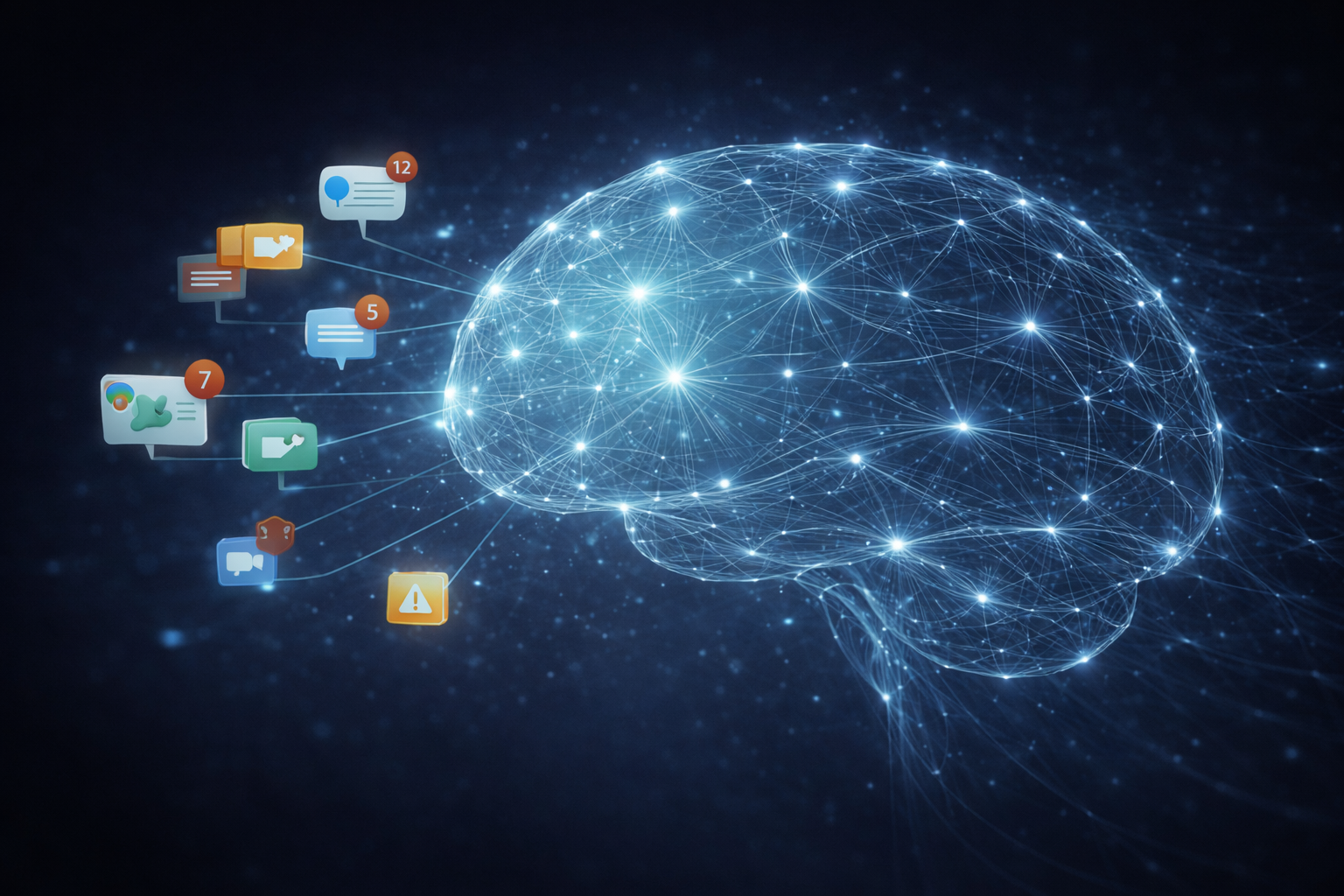
Professionals today interact with a continuous stream of digital inputs—emails, notifications, AI tools, messaging platforms, and virtual meetings. While these technologies increase efficiency, they also create new cognitive demands on attention, memory, and decision-making.
ACPI™ aims to provide a structured way to evaluate these pressures and better understand how digital work patterns influence cognitive strain and sustainable performance.
-

ACPI™ Research Framework
The ACPI™ model examines how digital work environments influence cognitive strain through multiple interacting factors.
Digital Work Environment
• constant connectivity
• messaging platforms
• AI-assisted tools
• information overload↓
Cognitive Processing Demands
• attention allocation
• task switching
• decision-making load↓
Cognitive Strain Outcomes
• mental fatigue
• attention fragmentation
• decision fatigue↓
ACPI™ Index Score
An estimate of perceived cognitive strain in digital work contexts. -
Core Research Domains
The ACPI™ framework draws from several established areas of research in cognitive and behavioral science.
Cognitive Load Theory
Cognitive Load Theory explains how working memory has limited capacity. When information demands exceed this capacity, cognitive performance declines and mental strain increases.
Decision Fatigue
Decision fatigue refers to the deterioration in decision quality after extended periods of decision-making. High volumes of digital tasks can intensify this effect.
Attention Residue
Research shows that switching between tasks can leave part of the mind focused on the previous task, reducing efficiency and increasing cognitive effort.
Technostress
Technostress research examines how digital systems, constant notifications, and complex technology environments contribute to psychological strain and reduced productivity.
-
Cognitive Challenges of Digital Work
Modern work environments are increasingly shaped by digital communication and AI-supported workflows.
These systems require individuals to process large amounts of information, respond rapidly to messages, and shift attention between tasks throughout the day.
Research suggests that frequent digital interruptions and multitasking can lead to increased cognitive load, reduced focus, and higher levels of mental fatigue.
Understanding these challenges is essential for designing healthier and more sustainable digital work practices.
-
ACPI™ Assessment
The ACPI™ assessment is designed to evaluate patterns associated with cognitive strain in digital work environments.
The assessment measures factors related to cognitive demand, including:
• digital multitasking behavior
• attention fragmentation
• perceived workload intensity
• decision fatigue
• mental strain related to digital workResponses are used to generate an ACPI™ Index score, representing the level of cognitive pressure experienced in digital work contexts.
-

Research Status
ACPI™ is currently in the conceptual and assessment development stage.
The framework integrates established research from cognitive science and digital workplace studies to explore the impact of modern digital environments on cognitive performance.
Future research will investigate patterns of cognitive strain across different digital work settings and explore potential strategies for improving cognitive sustainability.
-

Selected References
Sweller, J. (1988). Cognitive load during problem solving: Effects on learning. Cognitive Science.
Vohs, K. D., et al. (2008). Making choices impairs subsequent self-control. Journal of Personality and Social Psychology.
Leroy, S. (2009). Why is it so hard to do my work? The challenge of attention residue when switching between tasks. Organizational Behavior and Human Decision Processes.
Tarafdar, M., Tu, Q., Ragu-Nathan, B., & Ragu-Nathan, T. (2007). The impact of technostress on role stress and productivity. Journal of Management Information Systems.